
After the retreat: turning insight into the way your team works
The value of a retreat is not what happens on the estate. It is what survives the third week back at work.
On the last morning of a good retreat the room is warm with intention. People have said true things to each other. Someone has apologised properly. There is a page of commitments on the wall and a genuine desire to keep them. Then come the flights, the inbox and the quarter. Three weeks later somebody asks whether anything actually changed, and the honest answer is that the mood did.
The Monday problem is structural
It is tempting to explain this as a failure of discipline, and to promise yourself that this time the team will be more rigorous. It rarely is discipline. The week you return to is designed to absorb you: the same meetings, the same deadlines, the same escalation path, the same fifteen people who were not in the room. Intention does not fail because people are weak. It fails because the system around the intention was never touched.
That is good news, because systems can be changed in small, unglamorous ways, and those changes are what turn an experience into a different way of working.
Commit to three things, not ten
A retreat produces more insight than any team can carry. The instinct is to keep it all; the result is that nothing is followed. Choose three, and make each one a change in behaviour rather than a theme.
- 01One decision that will be made differently, and by whom.
- 02One meeting whose shape changes: who attends, what is on the agenda, what is no longer allowed to happen in it.
- 03One behaviour the leadership team will hold each other to, out loud, in the room.
Three is not a modest number. It is the maximum a team can genuinely hold while also running a business. The rest of the insight is not wasted: it becomes the material for the next conversation, and for the next retreat.
Give every commitment a shape you can see
Ambition is easy to agree on and impossible to check. “Better communication” cannot be verified by anyone. “Each project update names one risk and one decision needed” can be, in about four seconds, by anyone in the room.
- 01Owner: one named person. Not a team, not “leadership”.
- 02Date: a real date in the calendar, not “after the quarter”.
- 03Test: what we will look at in thirty days to know whether this worked.
Change the mechanics, not only the mood
Meetings are the strongest lever a leadership team has, and the cheapest to move. If the retreat surfaced that decisions die in the steering committee, change the steering committee before you rewrite the culture deck. If people do not speak until the most senior person has spoken, change the order in which the room is asked. Small procedural edits outlast almost every inspirational slide ever shown on a retreat.

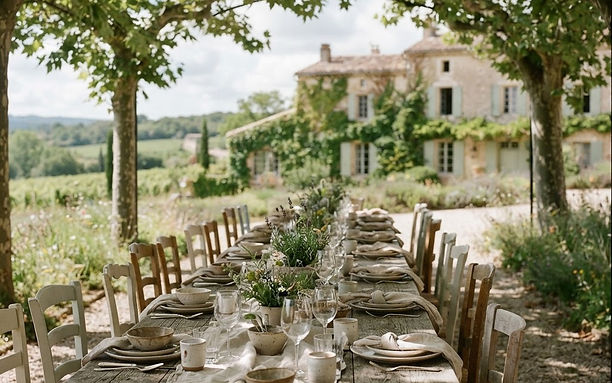
A retreat produces insight. Only mechanics produce change.
The distinction worth keeping on the wall
Build a thirty-day rhythm
Follow-through needs a container, and the container should be small enough to survive a bad week. Three short checkpoints are usually enough.
- 01Day 3: fifteen minutes to confirm the three commitments are still real, and still the same three.
- 02Day 10: each owner brings one obstacle, not a status report. Obstacles are the only useful information at this stage.
- 03Day 30: the team reviews each test and decides to keep, adjust or drop. Dropping something deliberately is a success, not a failure.
Keep it brief and slightly boring. Ceremony that is easy to attend is ceremony that still exists in month four.
Make the return legible to the people who stayed
Half the organisation did not go to the retreat. If their experience of it is a slightly quieter leadership team and a vague reference to “what we agreed in France”, the week will read as something that happened to somebody else. Share the three commitments. Name the decision that will now be taken differently. Invite the questions, including the sceptical ones. Nothing protects a change like making it visible.
Measure what moved, not how it felt
Satisfaction scores measure the week, not the work. Pick two or three observable signals and watch them for a quarter: how long a decision takes from proposal to commitment; how often a risk is raised before it becomes a problem; whether the difficult topic appears in the minutes rather than in the corridor afterwards.
The point
A retreat is a rare thing: a few days when a team can see itself clearly, with enough distance from the daily noise to notice its own patterns. That clarity is worth having, but it is not the result. The result is the third week back, when a meeting runs differently and nobody comments on it because it has simply become how things are done.
Plan the third week in the same conversation as the third day on the estate. If you would like help doing that, compose a retreat or book a discovery call and we will design both halves with you.